How Old Is Your Music Taste? The Real Release Years Behind It
Last year, Spotify Wrapped gave everyone a "listening age". People got answers anywhere from 16 to 92, often nowhere near their real age. The number went viral, and it left a lot of people asking the same thing: how old is my music taste, really?
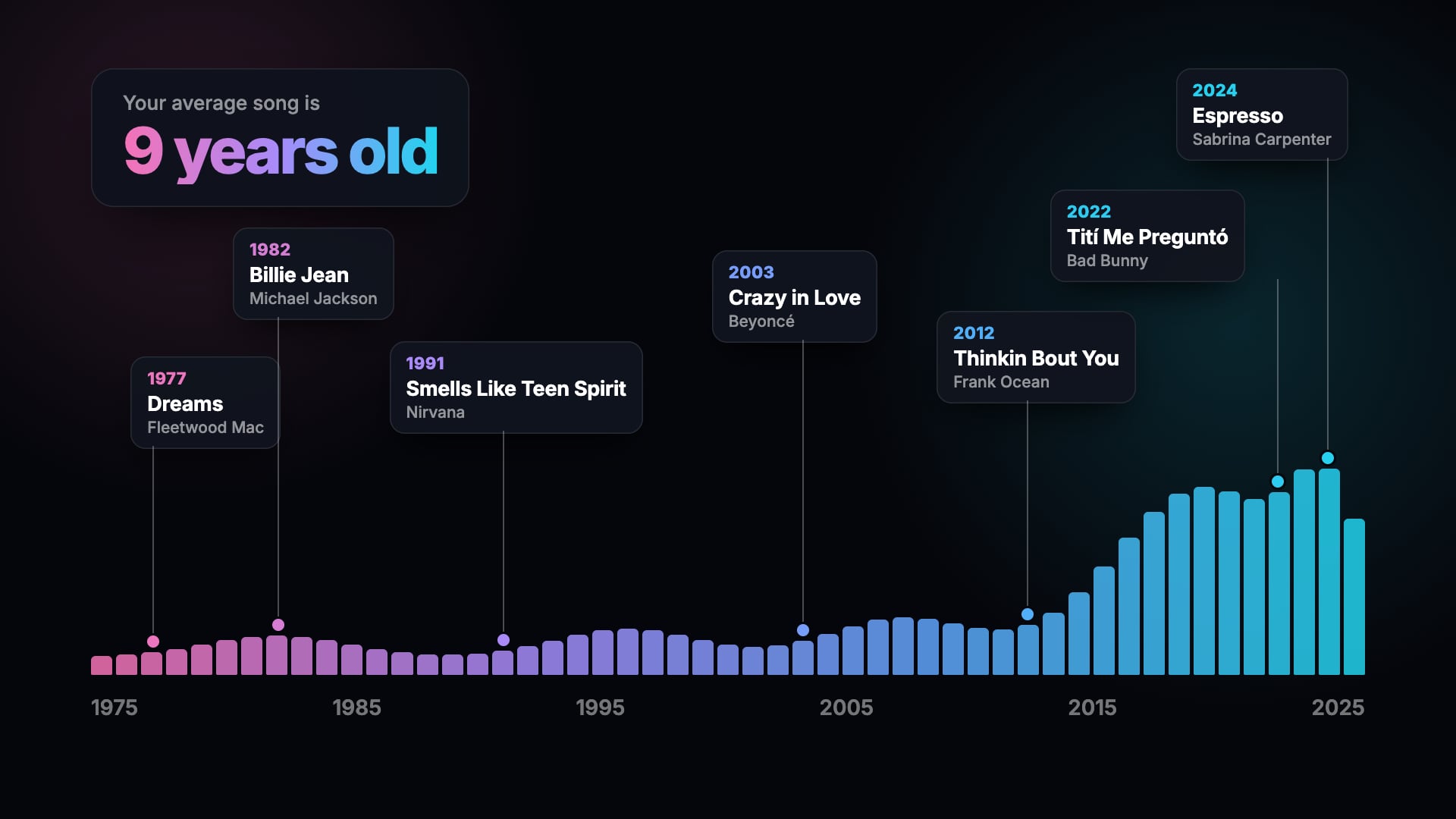
The answer is in the release years of the songs you play. Maybe your favorites are mostly from the last two years. Maybe you live in the 2010s, or Fleetwood Mac, Michael Jackson and Nirvana still take up half your week. Your listening history has the real years behind every song you've played. Here's how to see them.
Already have your Spotify data file? Upload it and open Your music's decades. Don't have it yet? It takes a minute to request: here's how.
How to see how old your music taste is
The steps below are for Spotify. On Apple Music? Upload your Apple Music export and open the same Your music's decades page.
1. Request your Extended streaming history
On your Spotify account privacy page, tick only Extended streaming history: untick Account data (it only covers the past year) and Technical log information. Press Request data, then confirm the email Spotify sends you.
It usually arrives within a day or two. Our Spotify extended history guide walks through every step, with screenshots.
2. Upload the ZIP to mystats.music
When the email arrives, download the ZIP and drop it on the Spotify import page. Don't unzip it. It's free, there's no account, and you don't log in with Spotify. Your file is read in your browser and never uploaded to our servers.
3. Open Your music's decades
The release years load in the background while you look around. Open Your music's decades from the menu, or the card on your overview.
Try it on the demo first
No file yet? The decades demo runs the same page on a made-up listener whose music mostly comes from the 2010s. Yours works exactly the same way.
What you'll find
Your music's age in six numbers
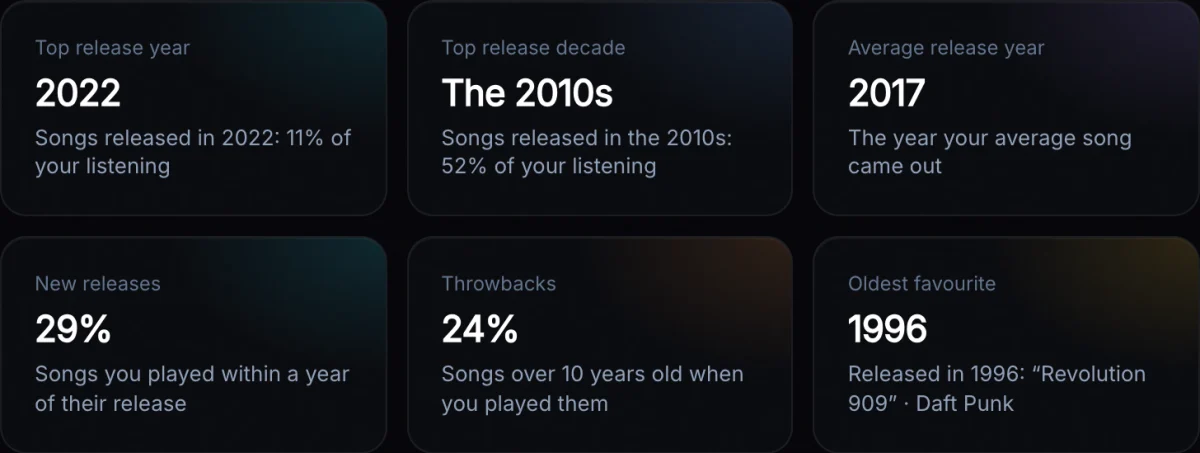
The top of the page sums up when your music comes from:
- Top release year and decade: the year and the decade the songs you play most came out.
- Average release year: the year your average song came out.
- New releases: how much of your listening was songs played within a year of coming out.
- Throwbacks: how much was songs over 10 years old when you played them.
- Oldest favourite: the oldest song among your 200 most played.
Every release year, on one chart
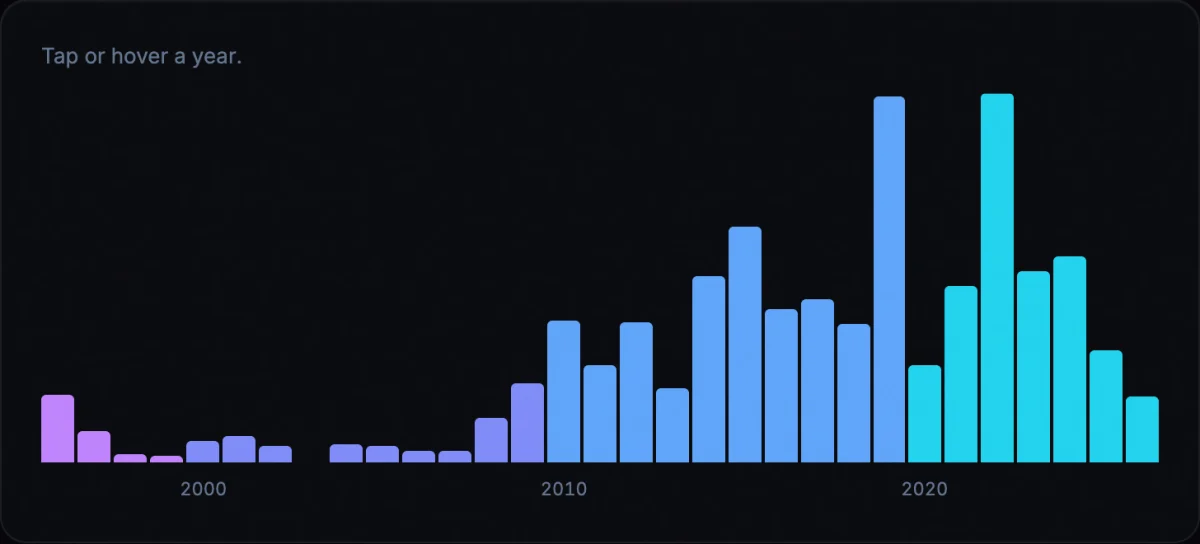
Below it, your listening is laid out by the year each song came out, one bar per year. A tall spike on one year usually means an album you couldn't stop playing. Tap or hover a year to see its share.
Your top songs from every decade
Pick a decade and you get your most played songs from it, with how many hours you spent on each. It's the quickest way to find your 90s favorites, or to see which 2000s songs you still haven't let go of.
Pick a year or a date range at the top and the whole page follows: how old your music was last summer, in your first year on Spotify, or across all time.
Is your music taste getting older?
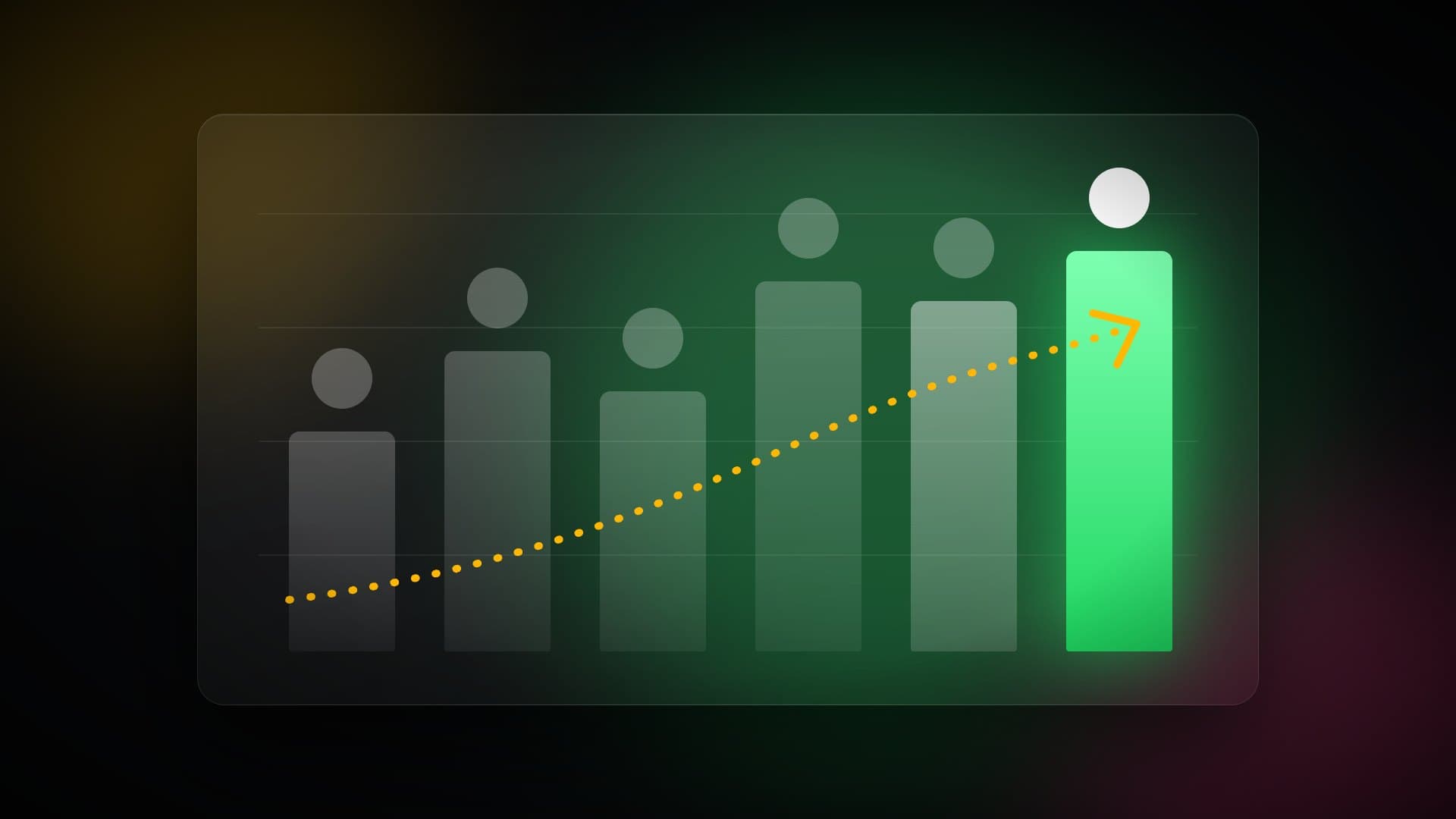
This is the part a single number can't show. Getting older or newer? plots the average release year of what you played, for every year in your history, and says which way you're drifting.
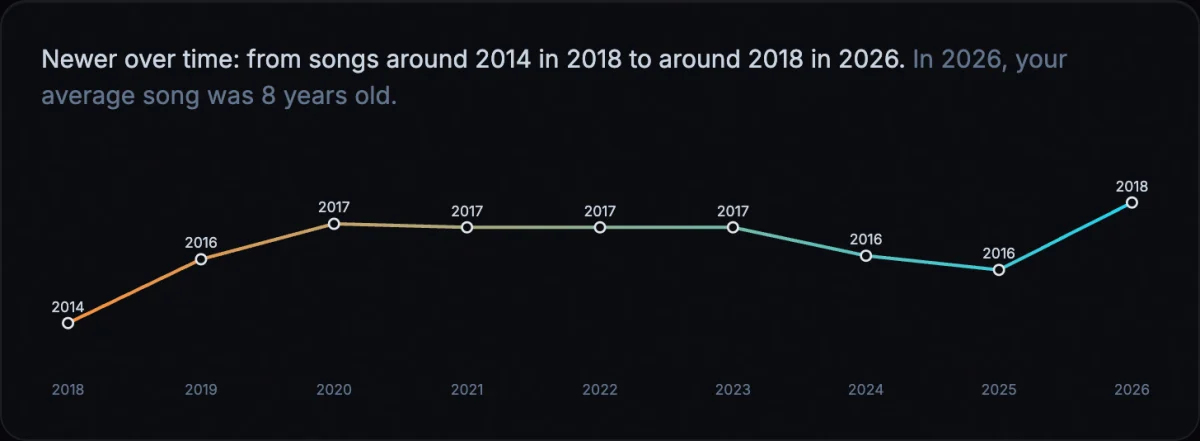
Most people's taste follows one of three paths:
- Keeping up: the line climbs about a year every year. You're always on what's new.
- Settling in: the line flattens out. You found your era and you're staying there. The demo listener's line rises, then levels off around 2017: their average song was 4 years old in 2018 and 9 years old in 2025.
- Digging back: the line drops. You've been discovering older music: your parents' records, a decade you missed, the songs behind the samples.
Check which one you are, then compare with your friends. It says more about someone than their top song.
Spotify's listening age, explained
In Wrapped 2025, Spotify gave everyone a listening age. According to Spotify, it's based on the "reminiscence bump", the idea that we connect most with the music from our younger years. It looks at the release dates of what you played that year and compares them with other listeners your age. Spotify's own example: if you play far more 70s music than people your age usually do, your listening age is 63, the age of someone who grew up in the late 70s. (TechRadar has more on how Wrapped is calculated.)
That's why it can feel off. It's one number, it covers one year of listening, and it depends on what everyone else your age plays. A few weeks of your parents' playlist on a road trip can add decades.
Your release years answer a simpler question: when did the songs you actually play come out? They cover every year in your history, not just one, and they show the breakdown: which decades, which songs, and how it's changed. No comparison with anyone else.
How mystats knows when a song came out
Behind it is a music catalog of about 20 million releases. Each song gets the year it first came out, and most of what you play gets one. A few rules keep it accurate:
- The original year, not the re-release. A "2011 Remaster" of a song from 1977 counts as 1977. Deluxe editions, reissues and greatest-hits albums don't make old songs look new.
- Listening time decides. Your decades and averages are weighted by the hours you spent on each song, so a song you played once doesn't count as much as one you've played for years.
- No guessing. If we don't know when a song came out, it's left out rather than given a wrong year.
Frequently asked questions
Can I see how old my music taste is on Apple Music?
Yes. Upload your Apple Music data export the same way and open Your music's decades: the same numbers, the release-year chart and your top songs from every decade.
Is this the same as my Spotify listening age?
No. Spotify's listening age compares one year of your listening with other people your age and turns it into an age. Your decades page shows the actual release years of everything you've played, across every year in your history.
Is it free? Do I need to log in with Spotify?
It's free, with no account, and you don't connect your Spotify account. You only need your Extended streaming history file, which anyone can request from Spotify, free or Premium.
Why does an old song show up as a new release?
Usually because a new version came out: a remix or a cover counts as its own song, with its own year. A plain remaster keeps the original year.
Why are some of my songs missing a year?
We couldn't find when they first came out. That's rare, and it happens most with very small or very new artists. Those songs are left out of your decades rather than guessed.
Is my listening history uploaded anywhere?
No. Your file is read in your browser and never uploaded to our servers. mystats keeps your stats in your own browser for 90 days so they open straight away next time, and you can forget them any time. See our privacy page.
What else can I see?
The same upload shows your top genres, how many hours you've spent on Spotify and the first song you ever played. For the full tour, see what your Spotify extended history reveals.
Insight Tool
See how old your music taste is
Got your Extended streaming history ZIP? See the real release years behind your music, decade by decade, for every year you've been on Spotify.